
I am hosting the next Food Blogger Happy Hour! RSVP Here!
-JAY
[ad]
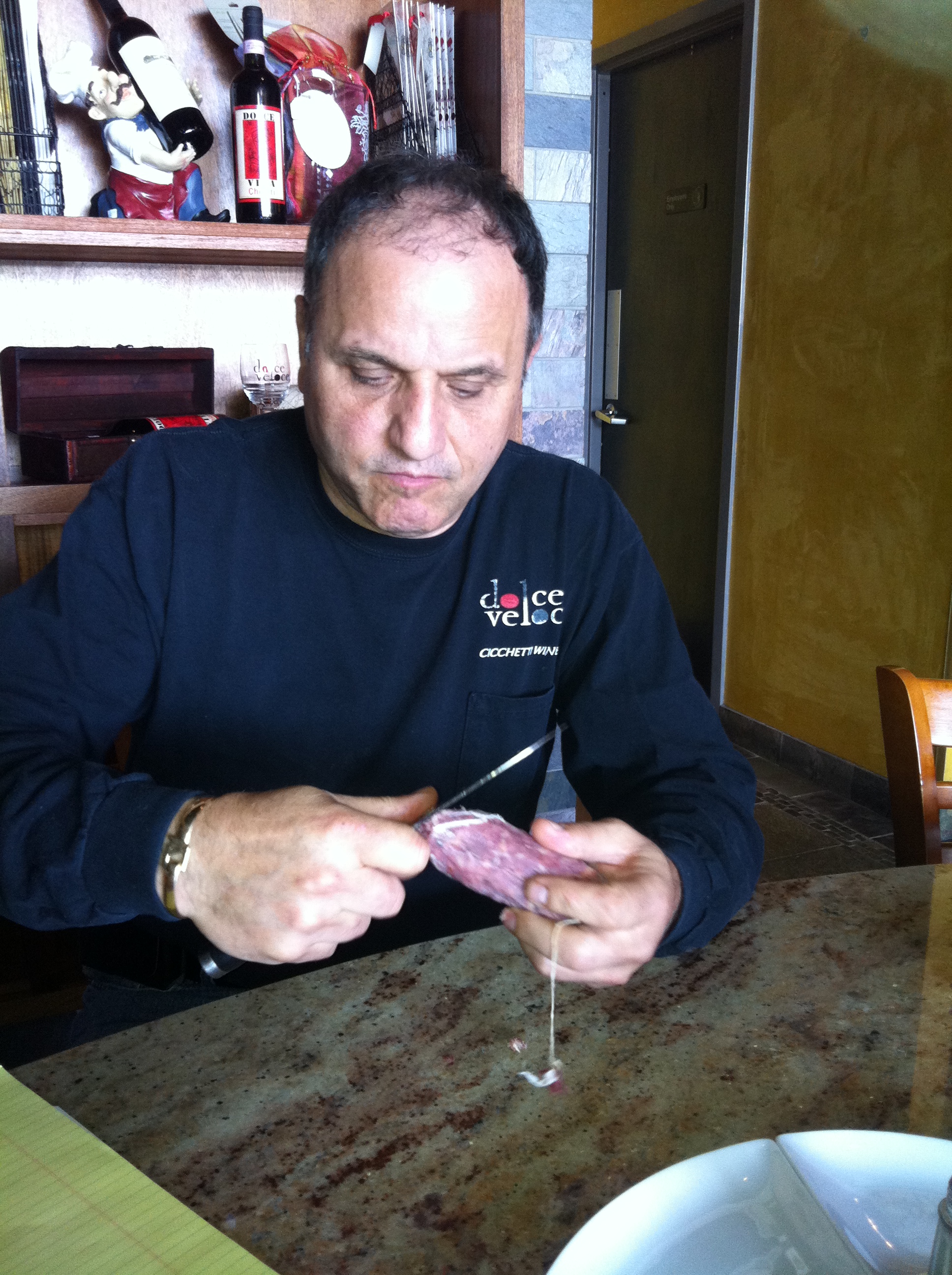
Pics by TKW. Joe Cutting Cacciatorini.
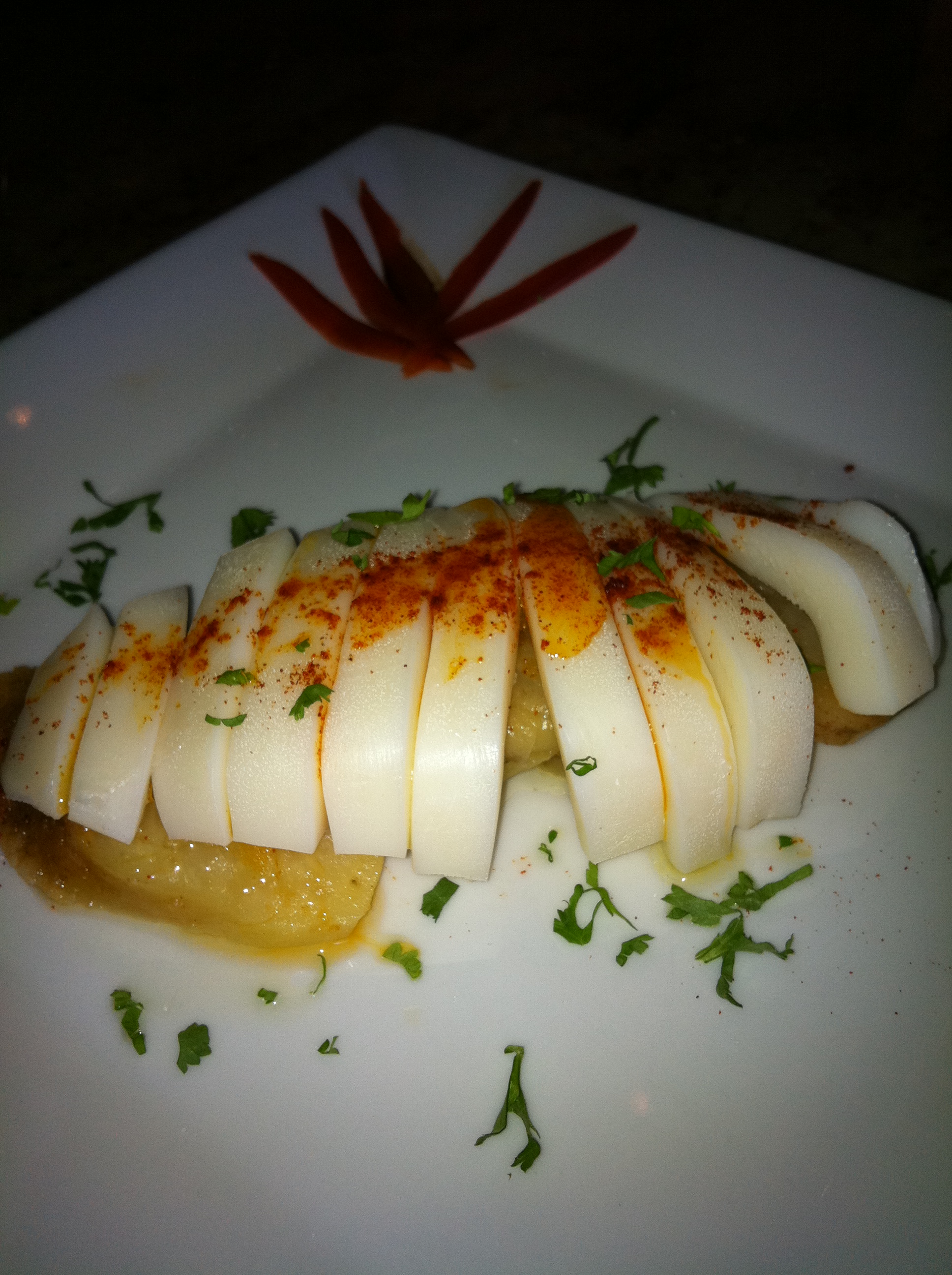
Cuttlefish.
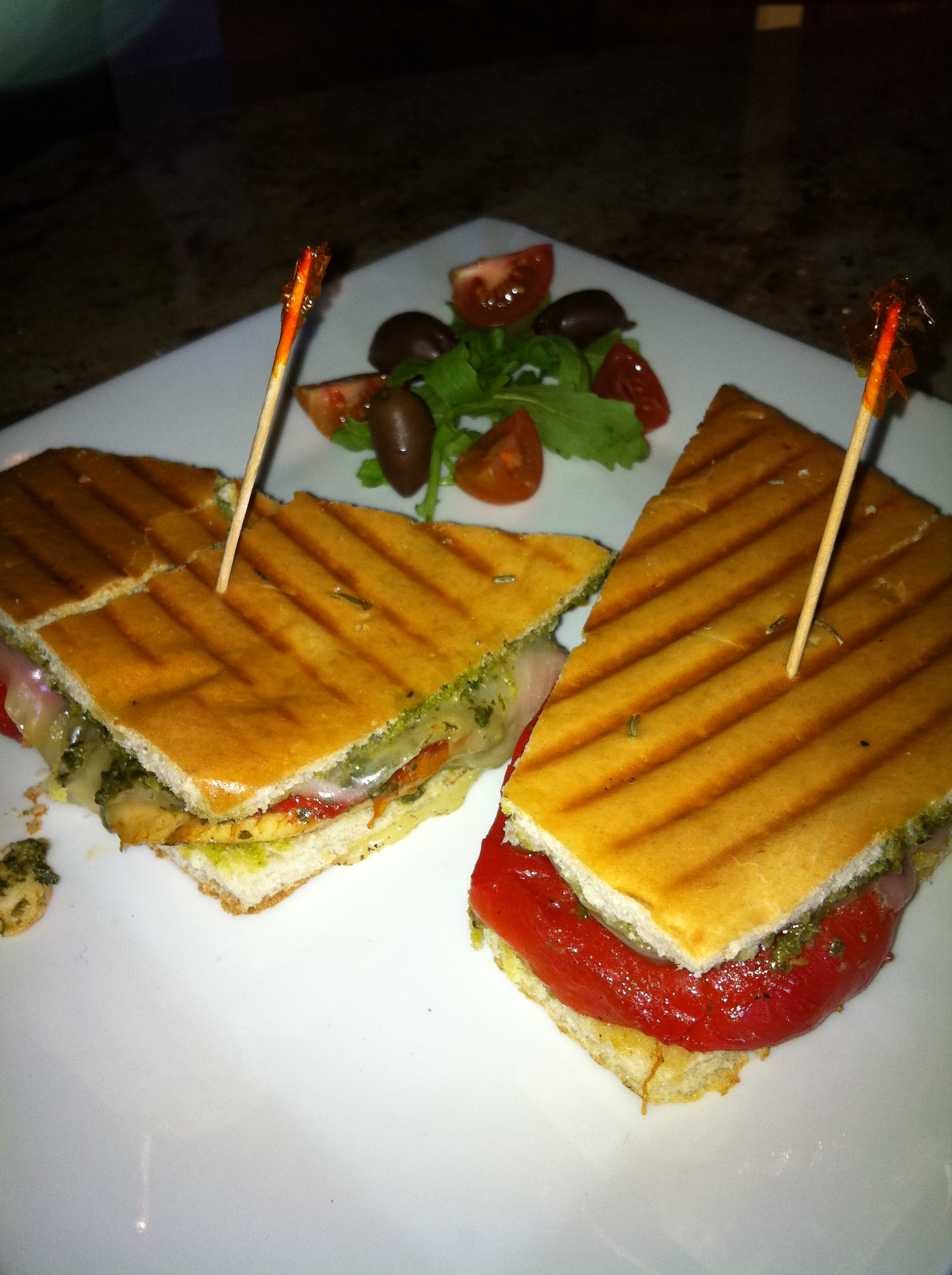
Panini.
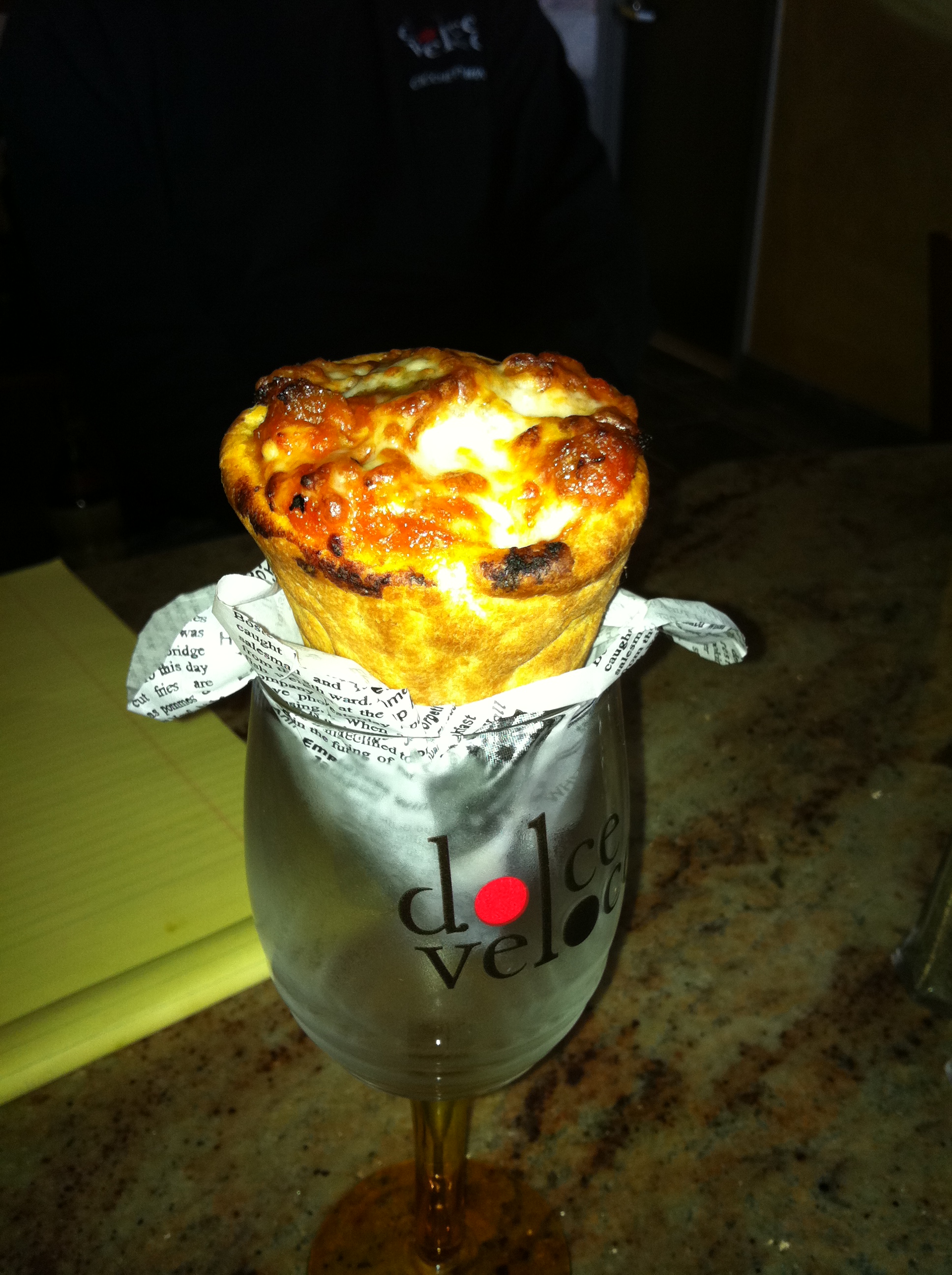
Pizza cone.
The next dish I tried was the Panini Romano, which was served on the house-made foccacia. The grilled chicken had been marinated, and the spinach added a nice crispness. The sandwich also contained one of my favorite foods: roasted red peppers. A little fontina cheese, which had melted very nicely, added the perfect finish. The bread had a good crispy crust from the press, and magically, all the ingredients stayed in the sandwich. Since the Panini are only $6.99, they are the perfect quick lunch.
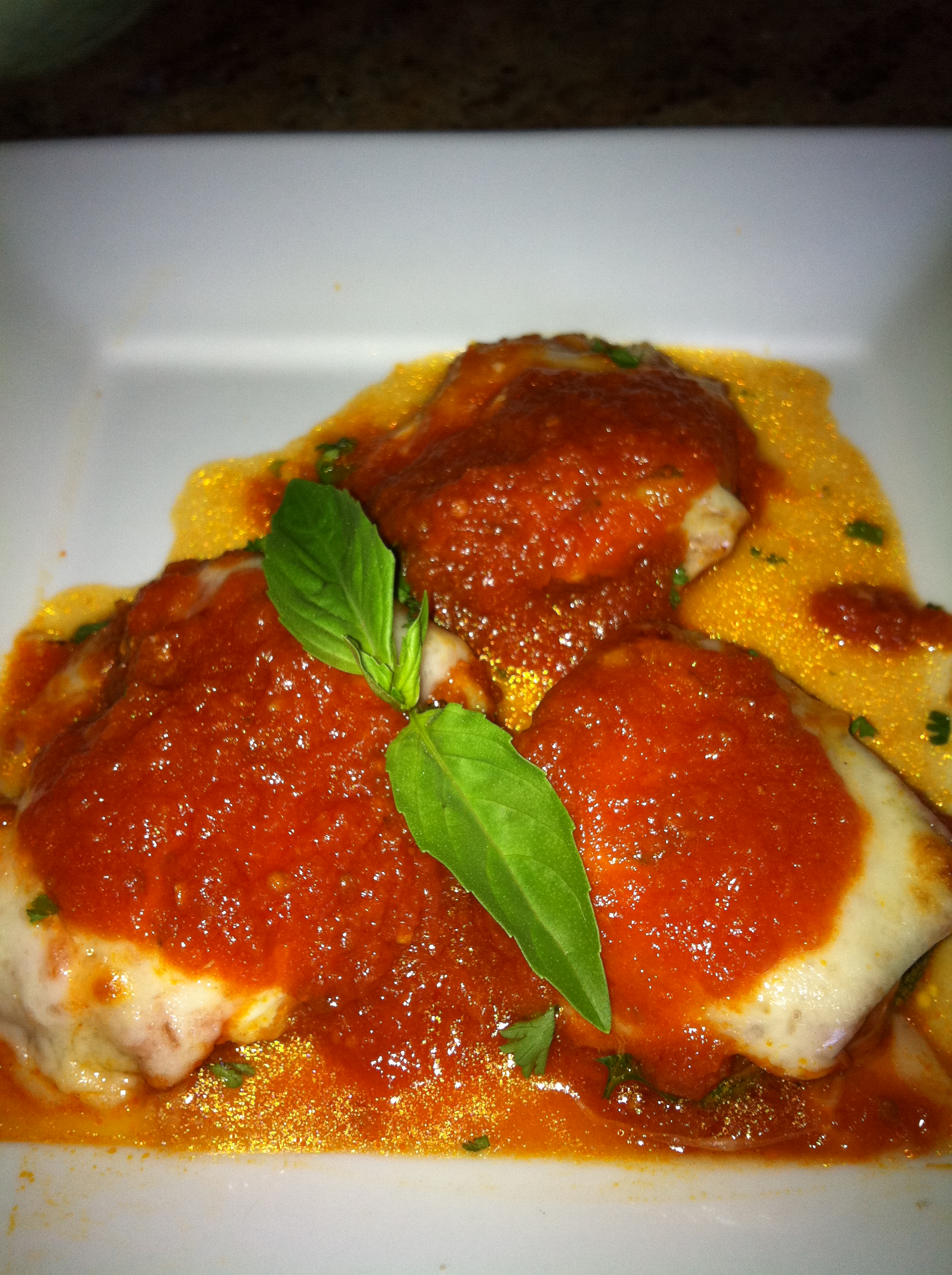
Rollatine di Zucchini.
The dish I tried next was the most amusing way to serve food that I’ve seen in awhile. The pizza cone looks like a waffle cone, but it’s stuffed with cheese and meat. Well, actually there are four varieties; I tried the sausage and pepperoni style and it truly was like eating a large piece of pizza rolled up. The sauce, cheese and meats were high-quality and delicious, like everything else, but it only costs $6.99. If you’re out with the kids and want a quick snack, the pizza cone is definitely the way to go. Since the crust wraps around the filling, a grown-up can eat and look dignified at the same time.
The last dish I sampled was the rollatine di zucchini. Essentially, zucchini is thinly sliced lengthwise, wrapped around a variety of cheeses and baked. The taste is fantastic. Since the ingredients are fresh, it’s easy to taste the different cheeses. Rolling them up in zucchini is a great idea since the vegetable does well with a number of cooking methods. The dish was finished with marinara sauce and had a little basil sprig for garnish. Since I love zucchini, this dish was easy to love.
I highly recommend visiting Dolce Veloce for wine shopping. Stay for the food and have a drink before dinner. Better yet, come in after date night and grab a little dessert. Have some really good and fresh food for lunch without breaking your wallet. This little space has so many facets that you’ll be coming back again and again — for something different each time.
-TKW (Tiffany)

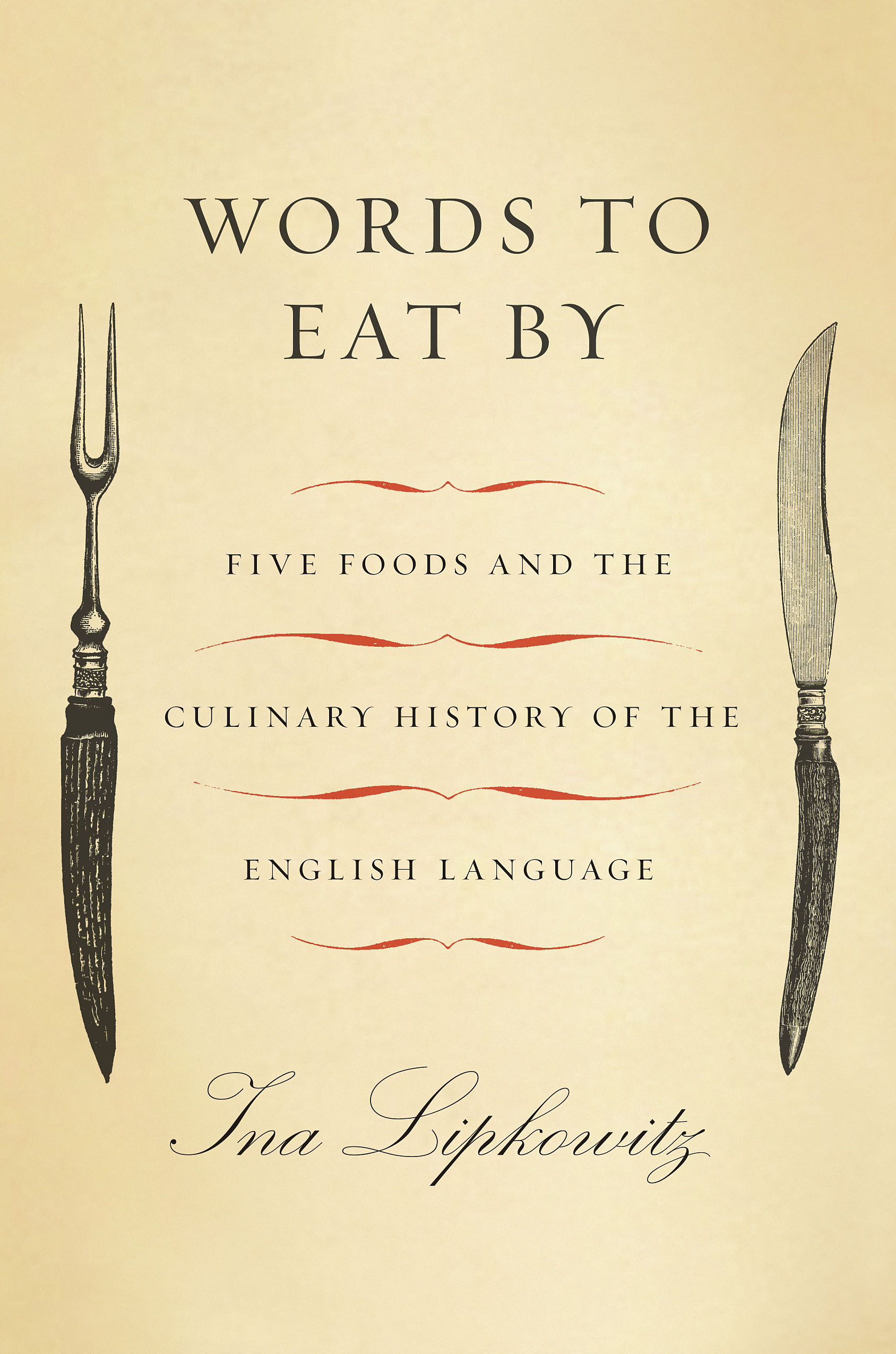 After reading Words To Eat By, authored by Ina Lipkowitz, I immediately felt the urge to make one of the many dishes featured in the book. In her book, Lipkowitz takes 5 regular food words and transforms them through her exploration and explanation of their languages of origin. She chose apple, leek, milk, bread, and meat as the focus of the book. Five ordinary foods that few of us think twice about in the grocery store (other than which variety) are revealed as vital links to our American culinary culture.
The concept of our words for cooking terminology and foodstuffs stemming from French and Italian was one of the many revelations in the text. Another was Lipkowitz’s demonstration via explanation and language charts how the word apple was used to indicate any type of fruit. Leeks are given their due, as are milk, bread, and meat. Reading through the chapters was incredibly eye-opening because Lipkowitz is pulling back the curtain on the history of the food words we know and love to eat. I had the opportunity to ask the author a few burning questions:
TKW: What was the weirdest thing you discovered during the writing of this book? Did any of the information shock you?
IK: “That’s an interesting question, because the more you read about what people have eaten over the centuries, the more you realize that “weird” is in the eye of the beholder. People have eaten things we’d call “weird”—like peacock tongues and shepherds’ buttocks—but they thought were normal (or at least decadently delicious). By the same token, they might think some of the things we eat are a little weird—the ammonia gas treated beef trimmings we affectionately call “pink slime,” for instance, or the insoluble gluten marketed as seitan. If those aren’t weird, I don’t know what is.”
TKW: Did you travel to any exotic locations for research?
IK: “Although I’ve spent time and eaten many wonderful meals in England, Scotland, Wales, France, and Italy, I have to admit that most of the research I did for Words to Eat By was in books rather than exotic locations. Even if I had had unlimited funds and could have traveled anywhere, I still wouldn’t have been able to eat with the ancient Romans, the Angles and Saxons, or the Normans, so I had to content myself with reading whatever I could—whether cookery manuals, literature, or agricultural treatises. One day they’ll perfect a time-traveling machine and then I’ll really be in business.“
TKW: Out of the five foods/words you wrote about, which have you begun to incorporate in your meals at home more often?
IK: “Well, like most people, I’ve almost always got apples, milk, meat, and bread in my kitchen (in fact, I live in fear of running out of milk for cereal and coffee, so I make sure there are two or three extra gallons in my basement refrigerator at all times). Leeks, though, are something I’m much more likely to cook now than I used to. In fact, I’ve made it my personal crusade to reverse the trend that Jane Grigson, one of my favorite food writers, referred to as “the social decline of this ancient vegetable.” I’ve made a conscious decision to use leeks where I used to use onions as my default allium—in soups, tarts, pies, and even in scrambled eggs. I make an amazingly good leek and goat cheese tart, and one of my son’s favorite pasta dishes is with leeks, peas, and smoked ham. It’s really good.”
TKW: Did you try all of the recipes in book? Which did you like the most? The least?
IK: “One thing I discovered while writing this book is that there’s no accounting for taste. I’m pretty game about eating almost anything, but somehow “Maryland Potted Marsh Rabbit” (which is Euell Gibbons’ euphemistic way of referring to muskrat) doesn’t get my gastric juices flowing—nor does Fergus Henderson’s “Crispy Pig Tails,” which have to be shaved with a throwaway Bic razor before being seared and finished in a hot oven. It’s not just meaty dishes that give me pause; I have to admit that I’ve never tried Hannah Glasse’s “Artifical Asses Milk” either: it calls for hartshorn shavings, eringo root, china root, snails bruised in their shells, and balsam of tolu. Even if I could find such ingredients, when was the last time I had a yen for artificial ass’s milk anyway?
“On the other hand, Celtic leek soups are absolutely terrific and the 14th-century recipe called Paynfoundew was a big hit when I served it for dessert at a dinner party last winter: it’s basically a fancy French toast where you soak the bread in red wine and serve it with honey, sweet spices, and coriander seeds.”
TKW: What was your favorite part about writing the book?
IK: “I loved that so many of my interests came together in this book: food, languages, history, and literature. Where else could I write about cheese and the Bible in the same paragraph?
“But even more than being able to indulge my own passions, I loved finding out how many other people share my fascination with food and words because for so long I’d thought I was the only one who got stuck on why we call things what we do—the only one who wondered what Häagen-Dazs means or why we buy them when they’re called “dried plums” but not when they’re called prunes. It’s been so gratifying to learn that there are a whole lot of people out there who are just as intrigued by the power of food words as I am.”
The sheer amount of research that Lipkowitz has done — both culinary and library — is impressive. As mentioned above, the author includes recipes from the Middle Ages, in the language and dialect of origin. A handy translation is provided for each, though it’s a nerdy pleasure to see the Middle English in all its glory. I highly recommend this book if you enjoy history, cooking, languages, or medieval recipes.
-TKW
