
This article is from our new Blogger Cara, who sat 2 seats to my left at the GMU lecture on food safety. I wonder if she noticed that the guy in-between us who was eating peperoni pizza while watching Food, Inc., was turning green. Actually, it’s appropriate that I met Cara at that lecture and she grinds her own meat. 🙂
-JAY
————
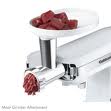
Forgot to take pictures during the process, but it looked a whole lot like the above photo.
Today, after almost 4 months of ownership of the food grinder attachment for my stand mixer, I finally busted it out of hiding and gave it a whirl. I had been grocery shopping with my friend Michael at Whole Foods, when we came across a sale on beef shoulder. Michael is a chef *slash* kitchen experimenter extraordinaire, so he is always grinding things up just to put them right back together…among other things. To illustrate, the other day he made “soup dumplings.” To make these, you create a stock from scratch, freeze the stock into cubes, then cover them in dumpling dough and steam them until the stock heats up. Like soupy water-bed pillows. This is all just in his spare time.
So, back to the meat counter. Michael decides to pick up a pound of the beef shoulder and encourages me to do the same, knowing full well that I still have not used my brand new grinder. After letting the idea marinate for a bit, I picked up a pound as well. I’m a bit competitive and just couldn’t let him be the only one grinding his own meat this week! Let the adventure begin.
This was some beautiful meat. Well marbled, a perfect deep dark (non-dyed) red, and smelling sweetly of flesh. Time to grind! I pulled out the grinder, neglected to read the instructions, and slapped it right on the mixer. Mistake. There were two grinding attachments on there for storage, and one needed to be removed. After a bit of fumbling, I was ready to grind. I cubed the steak and carefully dropped a few cubes into the tube. Nothing. (Guess you really do need that little plunger that shoves the meat into the grinder.) Shove, shove, shove, and poof! Ground meat flowing freely out through the end of the attachment, dropping gently into the bowl below. I got a little giddy with a feeling of awesome accomplishment.
I briefly considered whether or not I should have seasoned the meat first, but then remembered this extremely scientific experiment, and decided I’d be better off waiting. When the grinding was complete, I seasoned the beef with salt, pepper, dried mustard, and a mesquite seasoning I had tucked away in the spice cabinet, worked it all together, and made four gorgeous patties. I couldn’t wait to try one so I fried one up in a pan with a touch of butter and…well…let’s just say I think it rivals Michael Landrum’s at Ray’s Hell Burger. Obviously it wasn’t grilled, but it did not lack in flavor or texture.
Let’s just say I don’t know if I can go back to pre-ground beef. And why should I? The grinder has now been christened and I get the feeling it’s ready for work.
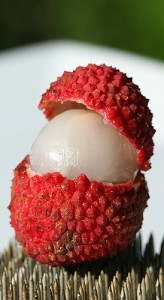 Attention: Friends, Romans, fellow alcohol lovers, I have a new signature drink. The Lychee-tini. Yes, I’ve typed that word and, amazingly, still have facial hair and testicles. My first, and we always remember our first, was recently, in Rehoboth Beach – a revelation. Something I have looked at and never taken seriously, like a Zac Efron movie, or my sister. There’s something about the sweet that, uh, give me one shot and it knocks me out for the rest of the night. I’m swimming the breaststroke in a lychee-tini pool, infinity and all!
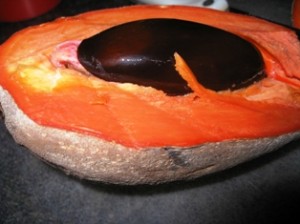
 When Hernan Cortez conquered Mexico in 1521, chocolate was introduced to Spain. The Spanish added sugar and cinnamon to the bitter drinking chocolate recipes of the Aztecs and Mayans. By the late 1600s, the British discovered the Spanish drink and began adding milk to the recipe, thus creating what would become the winter obsession of people worldwide for the next few centuries. By the mid 1700s, the industrial revolution afforded the technology to create solid chocolate bars.
 By Guest Blogger Trish King
 I apologize for another horse race, but I have been to the
![Juicer_pic[1].JPG](http://www.dcfud.com/wp-content/uploads/userimages/Juicer_pic%5B1%5D.JPG)
