 I love dim sum, but I’ve always just left it as something I could only have outside of home. Part of its wonderfulness is the experience – grabbing random bits off the carts, trying new and strange-looking things, and of course competitive gluttony with friends. Recently this changed a bit as I stopped at the Asian grocery on my way home from dim sum, and saw the big block of taro cake on the shelf. I had to try it.
The next morning I woke early (amazing what going to bed before midnight can do!), and pondered my purchase. A quick Google didn’t turn up any particularly interesting ideas, so I decided to go a bit mad. I had made a bunch of mole last week, and had tons of leftover sauce. I also had a papaya ripening on my windowsill, in need of a purpose. So, I decided to blend some ideas together:
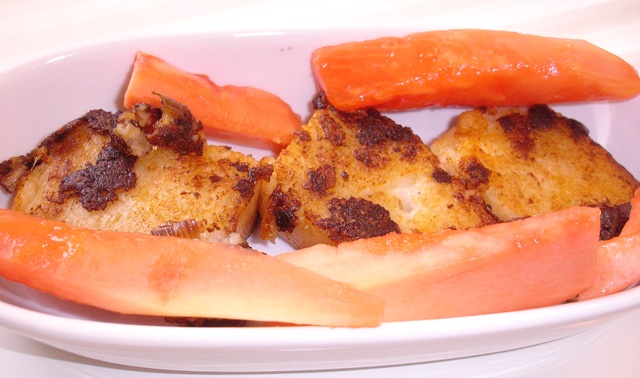
Heat the olive oil and sesame oil in a pan. Add about 1/4 cup mole, and let it heat until it begins to reduce. Now add your taro cakes, pouring the remaining mole over them, and splashing with fish sauce. Cook over medium heat for about 10 minutes, flipping now and then.
Now add your scallions, flipping your cakes around to make sure the scallions cook and the cakes get a good coating. Once they are nicely cooked, remove the cakes from the pan and let them cool a minute or two on a paper towel to wick off the excess oil.
Serving the cakes with fresh papaya really makes this dish: the sweet fruit balances the spicy and slightly oily cakes, and if the fruit is chilled, that makes for a nice contrast as well. Drizzle with soy sauce if you like – I’m a big salt fiend so I do. It’s almost like having dim sum at home.
Enjoy!
 …Not ‘kvetch.’ That’s what I do about the cold weather, especially in the South, where such things should not occur. Ghivetch is a traditional Rumanian/Jewish vegetable stew which is a staple of my family’s cold-weather kitchen.
 Sadly, I’m 15 miles from the nearest acceptable option, in the middle of midterms, and flat broke.
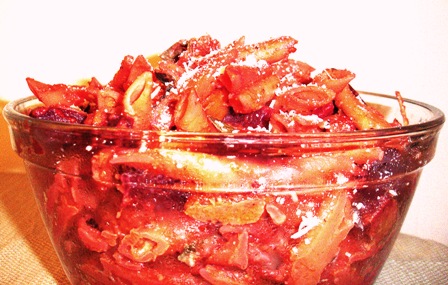 Sometimes, when you cook something haphazardly, and the results are … haphazard. On rare, wonderful occasions, they are delicious and satisfying and worth repeating in a more orderly fashion. It’s October – properly fall now – and my first proper dish of the season was one of these delightful surprises; I’ll make it again without a doubt, and a bit of advance planning will make it even more amazing.
 Now that the weather is starting to turn cool, I’ve been thinking about earthier flavors and darker colors. And soups. I know that there’s a soup for any weather, but except for gazpacho, I want nothing to do with the stuff in summer. But recently I was treated to another Spanish soup, which is in my mind a perfect fall dish. I don’t know what it’s really called, but the friend who made it claims this to be “something I learned from my nan” says it’s from Don Quixote’s own La Mancha region of Spain. Why a Spanish girl calls her grandmother ‘nan’ is anyone’s guess.
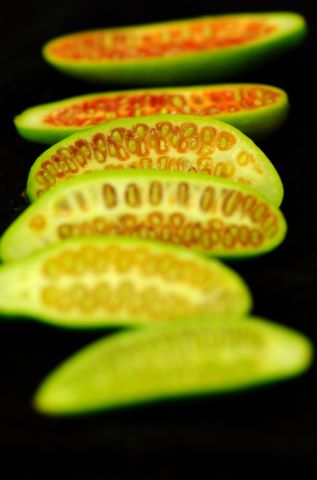 Continuing my adventures with strange vegetables from the farmers market, this week I noticed an older Indian woman being very excited to her shopping companions over a pile of small, gherkin-shaped vegetables labeled “Tindora.” My curiosity piqued, I asked her what they were and how to cook them. Her reply was that she called them “Vargoli” – the Hindi to Gujarati’s “Tindora” and the English “Ivy Gourd” – and that she sliced them and stir-fried them with mustard seed, cumin and turmeric; her companion added that ground peanuts were a good garnish. They also suggested that I pick only long skinny ones, and if any turned out to be orange inside, I shouldn’t use them.
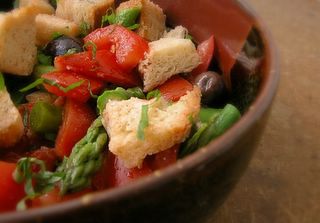 This week focused on salads, mushrooms, and vinaigrettes, which was great because up until this class I was proud of myself if I mixed my own Caesar salad rather than buy it in a bag. I could never figure out why my own made-up salads didn’t turn out well, but I didn’t care very much. I was salad-challenged.
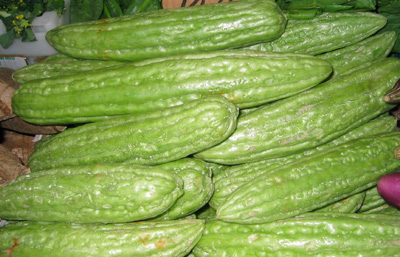 In the US we tend not to eat much in the way of extremely bitter foods – grapefruit and endive are about as bitter as we go. Despite this, I love bitter foods, and I’d long wondered about the things at the farmers market – the strange ones with bizarrely textured, bright green skin. So today I asked the girl at one stall how one might cook a bitter melon. Her response: “However you want…I usually stir-fry them or boil and mash them. They’re so tasty!” It turns out that they’re really good for you too – perhaps helping to regulate digestion and