• 21Oct

    photo 1Enchiladas are one of my top 5 most craved meals. If I go to a Mexican restaurant, I inevitably find my way to the enchilada section of the menu and usually get a combo of beef and cheese enchiladas, always with red sauce. I also make them at home frequently. I love their melted cheesiness, the soft corn tortillas filled with beef, the flavorful red sauce… from a can! Other than beans and tomatoes, I’m not big on canned food.

    So, the other day, as much as I’ll happily, and without shame, admit to photo 2loving the canned sauce, I began to wonder… “How do they make that?!” So I started to google. I am by no means an authority on authentic Mexican food, but my taste buds don’t lie to me very often. Do you know how many “authentic Mexican enchilada sauces” used tomatoes as their base? dozens! Even I know that’s not how it’s made. I knew the sauce was based on dried chiles, but that’s about all I knew.

    photo 3So I researched (obsessively) and found two recipes that sounded very authentic, and had no tomatoes or flour on their ingredient lists. One was based on a recipe from Rick Bayless’ cookbook, and if you’ve never heard of him, he’s like the ultimate rock star chef when it comes to authentic Mexican cuisine. Another was from mexicoinmykitchen.com. I took my favorite elements from both and combined them with a few other things I learned on my googling adventure, and came up with this. It was so fun and satisfying to create something from scratch that I have loved for so long! And it was really inexpensive and easy. The best part was that my house smelled like a Mexican restaurant, which I took as a sign I was doing something right! Here’s how I did it.

    Mild Red Enchilada Sauce

    Ingredients:

    • 8 dried ancho chiles (also called California chiles)
    • 3 whole garlic cloves
    • 1 tbs salt
    • 1 tbs sugar
    • 2 tsp black pepper
    • 2 tsp dried oregano
    • 1 tbs cumin seeds (or ground cumin)
    • tiny pinch of ground clove (traditional, but optional)
    • 2 tbs white vinegar
    • 2 cups chicken broth
    • 2 cups soaking liquid
    • 3 tbs vegetable oil

    To Prepare:

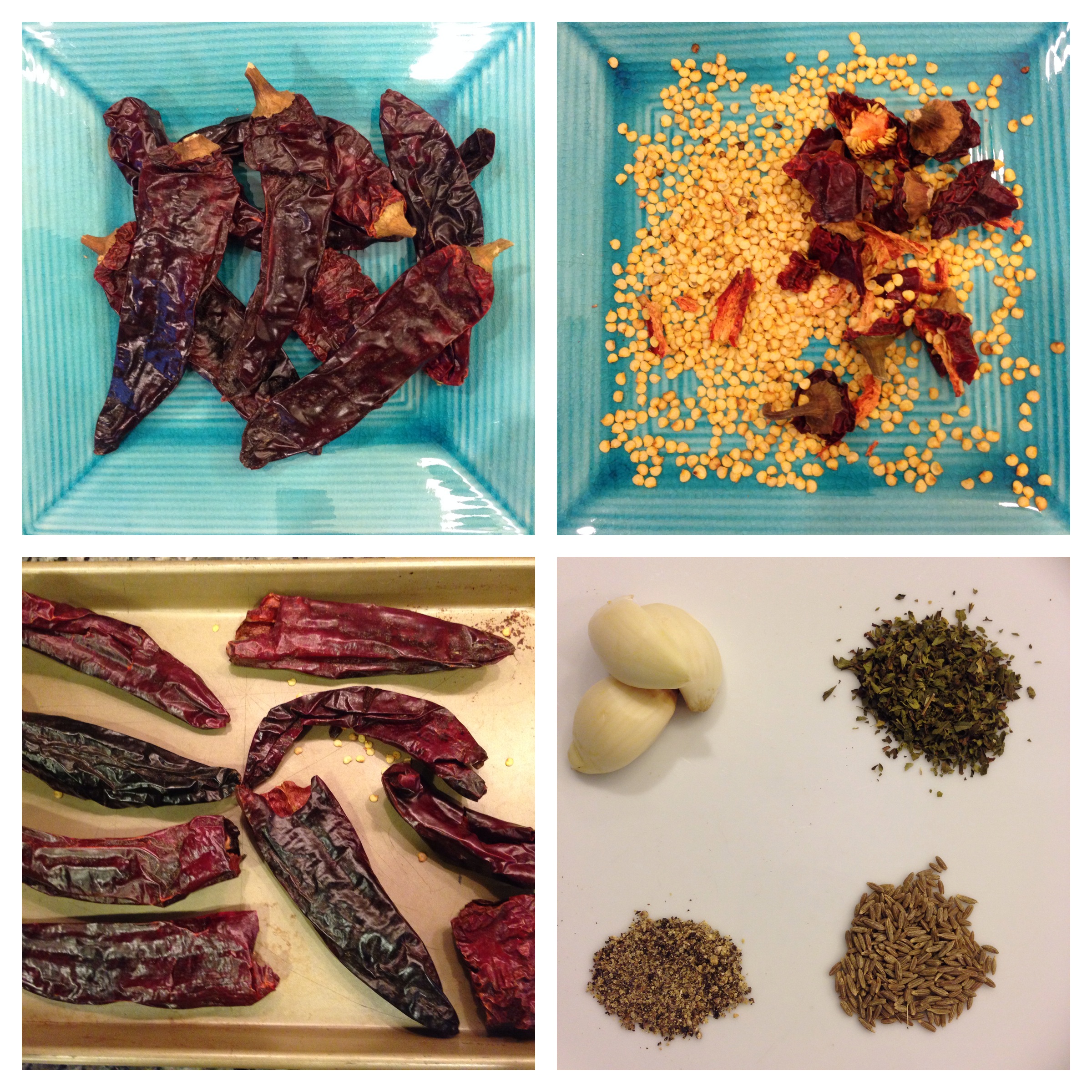
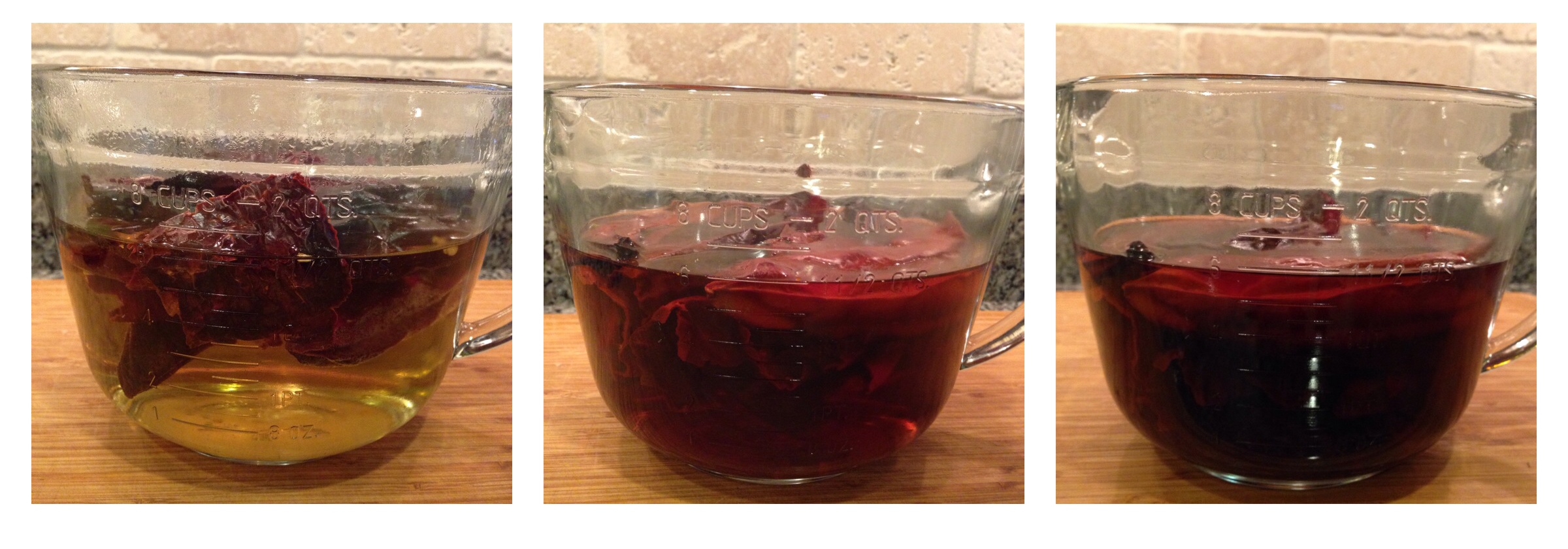
    Preheat oven to 400. Set a tea kettle or small pot of water to boil. Prepare chile peppers by tearing or snipping of stems and shaking out as many seeds as you can. Place peppers on baking sheet and toast in preheated oven for 5 minutes. Place peppers in a large heat proof container and pour over boiling water to cover. Let them steep for 1-2 hours. The water will become a deep red color and the peppers will become very soft.

    Place peppers, two cups of soaking liquid, garlic and spices in a blender and puree until completely smooth. Heat oil in saucepan and add the pureed mixture, vinegar, and chicken stock and cook over medium-high heat until the sauce reduces and slightly thickens.

    Use in your favorite enchilada recipe and enjoy!

    Note: For a vegetarian version of this, either use vegetable stock, or just use 4 cups total of the soaking liquid and omit the stock all together.

    -ALH (Ani)

  • 21Oct

    easy_everyday_cookbook_photoEasy Everyday Gluten-Free Cooking is a new cookbook out on the market written by Donna Washburn and Heather Butt. Overall, the recipes I tried were tasty and different. Each recipe had it’s own unique flair of flavor that made it enjoyable to try. My personal favorite was the Crunchy Almond Chicken. The almond slices added a nice depth of flavor and texture to the classic breaded chicken cutlet.

    For the most part the recipes were easy to prepare. At least for the entrees. There is a reason however, that I never prepared any of the dessert or bread options. Many of them required up to three or four different flours as well as more than one starch. Most grocery stores do not carry these specialty flours. The only one by me that does is Whole Foods and my local Whole Foods isn’t exactly around the block. So any recipe that requires me to go there for specialty ingredients boxes it out of the “Easy or Everyday” category for me. Also almost the entire bread section requires either a bread machine (which I do not own) or freezing dough for up to six months. For me the terms easy and everyday are associated with using ingredients that will be stocked in most peoples’ pantries or kitchens already or that they can easily obtain from whatever local grocery store IS around the block from them in a pinch. The recipes should also be incorporating only the basic cooking machines that every person has in their kitchen.

    As I said, I did like what I tasted from this cookbook. So for at least the main event portion of the cookbook I’d say two thumbs up and great job. I also really appreciated the tips in the front explaining the different flours and offering suggestions for easy gluten-free traveling and packing lunches. I feel better informed about the different kinds of baking flours and will be more tempted to use them in the future. Provided I’m planning ahead to do so and can either order them off the internet or take a planned trip to Whole Foods and scoop up a few at once.

    However, in terms of title and expectations, I question their choice in labeling it with the terms easy and everyday. I feel that these terms misrepresent what people are getting with this cookbook. Yes, once you’re in the kitchen these are recipes that will help you overcome your fear of gluten-free cooking and substituting different ingredients, but you need to be well-stocked and prepared to do so.

    Grade: B

    -JPM (Joyana)

  • 16Oct

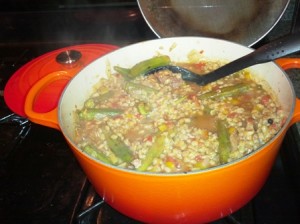
    Goat StewI’m furloughed. That means I’ve had time to explore recipes that take way longer than my usual 30-minutes-and-done dinner routine, and also to use ingredients I don’t really have any idea how to address. I saw bags of trigo mote verde (peeled green wheat) at the Latin grocery I’d been meaning to check out for some time, and bought it on a whim. When I saw the goat tidbits were on sale, an idea began to form. When I started to ponder what to cook, I noticed that the goat was not … the highest quality … and was going to need major work to taste good. I’m not one to waste food if I can avoid it, so I decided that some spice-fu should do the trick.

    So, inspired by the Spanish labeling on the wheat, I decided to take a Latin direction (heavily informed by my own Caribbean leanings with respect to goat). I started with sofrito:

    • 1 large yellow onion, diced
    • 2 yellow bell peppers, diced
    • 1 head of garlic
    • 2 habanero (scotch bonnet) peppers, finely diced
    • 1 tsp dried cilantro
    • 1 tsp dried basil
    • 1 tbs sesame oil
    • 2 14.5oz cans of diced tomatoes, one drained

    And added the other ingredients along the way:

    • 2 pounds goat meat (boneless, chopped into 1 inch cubes)
    • 1 bag of trigo mote verde (peeled green wheat)
    • About 5 tsp fresh grated ginger
    • A handful of allspice berries
    • 1 tsp each cumin, turmeric, and cinnamon
    • 1 tsp sea salt
    • 4 cups water
    • 1/2 cup white wine vinegar
    • 1 pound okra (washed, but NOT CUT*)

    I browned the goat briefly in a large dutch oven, then set it aside.

    Next, I added all the sofrito ingredients except the tomato, and tossed over medium heat for about 5 minutes, until fragrant. Then I added the tomatoes and re-added the goat.

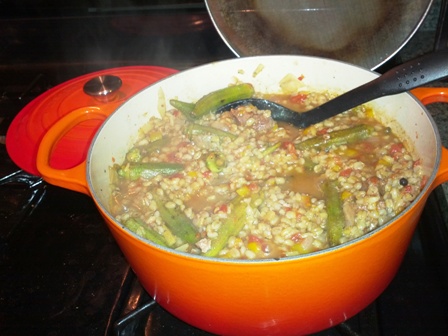
    Once well mixed, I added 3 cups water, trigo mote verde, allspice, cumin, turmeric, cinnamon, and salt, and brought it all to a boil. Once boiling, I reduced the heat to simmer and covered the pot, leaving open to let some steam escape. Stirring occasionally, and sometimes tasting to adjust flavor, I let that cook about 30 minutes.

    At this point I added the ginger, vinegar (I didn’t want to cook away all that sharpness), and a bit more water, and re-covered for another 15 minutes or so. At that point, things were looking close to done, so I added the okra and did some final salt/pepper adjustments.

    Another 10-15 minutes saw the okra where I wanted them, nice and al dente as a textural contrast, so I turned off the heat and served my stew. Delicious, with the heat and spice and vinegar pushing the very earthy goat into a lovely flavor profile, and the long cooking keeping it nice and tender.

    This recipe makes what I’d call about 10 servings, so I’ve been taking fun ways to use the leftovers too. My favorite so far: wrapped, dolma-style, in collard greens blanched in lemon juice. Enjoy!!

      – MAW


    * Oxygen is what makes okra get all slimy. If you don’t cut it before cooking, the texture is much nicer.


  • 11Oct

    MOO ThruSome of the best Ice Cream I have ever had is available at farmer’s markets. Moo Thru is an example of this; their ice cream truck can be found at the Reston Farmer’s market on Saturday mornings (or their store in Remington, VA). They even sell pints. Who wouldn’t want to buy dairy products – in this case, ice cream – directly from dairy farmers? Their chocolate ice cream was rich, chocolatey, creamy, and delicious, and the vanilla is excellent as well. They told me that if they find anyone making better ice cream, they figure out how, so that they can improve theirs. (I hope that information wasn’t off the record.)

    NicecreamNicecream Factory (no, spell check, it isn’t a typo) is an ice cream company that uses (mostly) DC’s locally sourced ingredients and unique freezing agent liquid nitrogen, to create the premium ice cream right before your eyes. I say “mostly” local ingredients because the same week they told me they would no longer have strawberry ice cream because it is out of season, mango was one of their flavors. And, chocolate, coffee, and pistachios aren’t grown locally either.

    The picture in this article shows their menu (for that particular day earlier in the season) but they do seem to have a good variety of flavors available for pint delivery or pickup, although I can get their ice cream at their Kingstowne farmer’s market stand for the next couple of weeks (until the market closes on 10/25).

    Nicecream’s products are very flavorful and delicious, with my favorite flavors of theirs being the pistachio (this is my favorite rendition of pistachio ice cream anywhere) , strawberry basil, and chocolate sea salt.

    -JAY

    Click to add a blog post for Nicecream Factory on Zomato

  • 11Oct

    From October 21st until November 3rd, Oyamel Cocina Mexicana will celebrate Its Seventh Annual Day of the Dead Festival with festive cocktails and a menu showcasing some of the most authentic ancient foods of Mexico. Tuesday evening, Cy and I attended the media preview for the festival. The food and drinks at this event were exceptional. I could not try the duck dish (since it has mushrooms) and the crab dish was not served.

    Day of the Dead Menu Specials:

    • Caviar de Chapala (Caviar, cilantro, onion, Serrano chile and green tomato in a warm tortilla)
    • Ostiones Pimentos (Lightly poached oyster with bay leaf, black peppercorn, garlic and lemon, served in its own shell)
    • Jaibas Rellenas (Stuffed crab shell topped with sea urchin butter)
    • Chilorio Negro (Black mole with beef and season vegetables)
    • Pato Frito en Chile Seco (Fried duck in a dry chile sauce)
    • Sopa de Calabaza (Pumpkin and squash soup with spiced pumpkin seeds, chile, annatto oil, and foie gras)

    Day of the Dead Cocktail Specials:

    • Atole Rico (Del Maguey Crema de Mezcal, masa, Mexican cinnamon, piloncillo, vanilla and lemon)
    • Resucitó (Maestro Dobel Diamond tequila, Cocchi Americano Rosa, lime leaf and grapefruit bitters)
    • Pato Borracho (House-infused duck Gran Centrenario Añejo, Chihuatl chili, pomegranate and pineapple with an almond air)
    • Atole Rico (A cold cocktail version of Atole, a traditional humble porridge Day of the Dead drink)

    -JAY

    Oyamel on Urbanspoon

  • 10Oct

    Equinox 1Chef Todd Gray held an exclusive Nordic Cuisine Tasting for journalists on October 8th at his DC restaurant, Equinox.  The theme:  Nordic food from Norway with a heavy emphasis on sustainable fish.  It was an eclectic and interesting group, but the main thing was the delicious food!

    So why Nordic food?

    Chef Gray recently joEquinox 2ined the Norwegian Seafood Council’s Chef’s Culinary Board along with five other chefs from across the country.

    The tasting was held in an intimate room at Equinox with 12 people.  Two of the people were from the Royal Norwegian Embassy and one from the Norwegian Seafood Council.  I made the blunder of asking if ABBA was from Norway…they are not.

    This tasting was fit for a princess.  I was given red wine at my request and two other white wines to go along with the fish tastings.  We were then given a mixed Nordic drink that went down smoothly to start off the tastings.

    Next were the canapés.  Chef Gray described them to us.  All three were delicious.  The fish canapé looked like sushi.

    First Course was warm risotto with crab, artichoke hearts and mushrooms.  I couldn’t taste the mushrooms and the dish was warm and soothing.  I love crab.

    The Second Course was Halibut from Norway encrusted with sweet peppers.  Delicious.  I loved the crunch of the pepper.

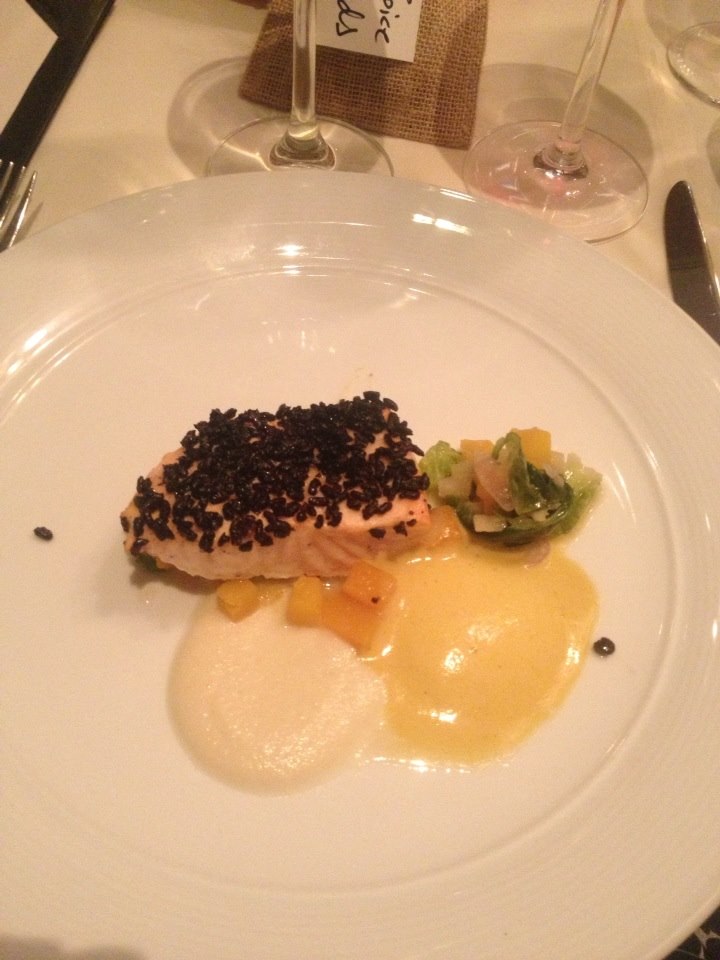
    The Third Course was Norwegian Salmon.  It was a sweeter dish, but smooth as butter.

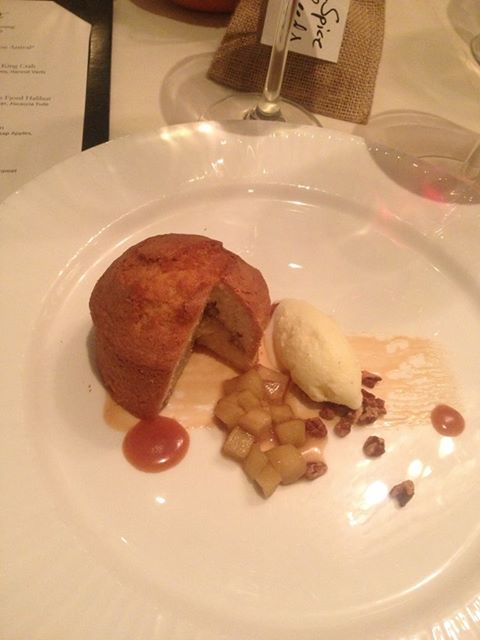
    The Fourth Course was the Honey Apple Cake with a slice of ice cream. Delicious.

    The Menu (Available through October 31st):

    Cocktail & Canape Reception

    Nordic Cocktails

    Beet-Cured Norwegian Salmon Gravlax

    Norwegian Salmon Crudo

    Hot-Seared Tataki

    First Course

    Risotto with Norwegian Red King Crab

    Artichoke hearts and black trumpet mushrooms

    Second Course

    Whole Roasted Deep-Water Norwegian Fjord Halibut

    Confit of sweet peppers, lemon thyme butter and focaccia tuille

    Third Course

    Riso Nero-Crusted Norwegian Salmon

    Cider-glazed Brussels sprout petals

    Winesap apples and Kobocha squash zabaione

    Fourth Course

    Honey Apple Cake with a slice of ice cream.

    Chef Gray will be focusing on Nordic fish at Equinox starting now.  The food is incredible and you don’t want to miss his take on how Nordic fish is served at his restaurant.

    Equinox:
    818 Connecticut Ave, NW
    Washington, DC 20006
    Phone: 202-331-8118
     
    -Marlene Hall (Guest Writer)

    Equinox on Urbanspoon

  • 09Oct

    Being furloughed and not really having much in particular to do (but needing to save money!), I’ve been experimenting with African cuisine, particularly soups and stews, and even more particularly rekindling my love of (a) couscous and (b) fufu.

    What follows is my favorite concoction so far, a hybrid recipe using ideas from a few places – mostly from The African Food Joint, Serious Eats, and Leslie Cerier. Being me I couldn’t be bothered to follow any of the recipes exactly, but the result was sufficiently delicious (if not all that authentic), to make it very worth sharing.

    Vegetable StewI used:

    •  2 cups cherry tomatoes
    • 1 medium yellow onion, chopped
    • 1 Scotch bonnet Pepper, seeded and minced
    • 1 large Yam (the purple kind with white flesh), cubed
    • ½ cup raisins
    • 1 can Garbanzo Beans
    • 4 cups kale, chopped
    • 6 small garlic cloves, finely diced
    • 1 Cinnamon stick
    • 1 tablespoon Sesame oil
    • 4 cups Chicken Stock
    • Salt, pepper, cayenne to taste

    What I did:

    •  In a large pot (I used an aluminum stock pot), add the tomatoes, onion, 3 cloves of garlic, and Scotch bonnet and toss with the oil over high heat, just until it starts to get fragrant.
    •  Add 1 cup of stock and bring to a boil for about 2 minutes, then blend using your hand blender.
    •  Add your remaining stock and bring back to a boil, adding your yams and cinnamon stick. Boil on high heat for about 5 minutes. Now lower heat to simmer, cover the pot, and leave for about 15 minutes.
    •  Next, add your chickpeas, up the heat to medium, and taste/adjust heat level using cayenne. Stir in your kale and remaining garlic, cooking a few minutes till the kale is done.
    •  Season with salt, black pepper, and more cayenne if needed.

    The first night I made this, I made fufu as described in the African Food Joint recipe, except I made quenelles out of it which I then fried in butter, because I just got back from France, but it goes well with the more traditional fufu, and couscous too. If I were going to adjust this recipe next time, I’d again call out to my French culinary habits and add in some cream in the second step (the blending), and maybe use a second Scotch bonnet as opposed to extra cayenne. That said, I’m going to happily keep eating this batch till it’s gone!

     – MAW

  • 09Oct

    Simply Raw Kitchen by Natasha Kyssa offers great insights into a new healthy lifestyle. The recipes are tasty and have a great punch for only a few calories. So in that respect, this cookbook introduces us to the positives of the “raw food” world. I admit I began as a skeptic about the possibility of cauliflower soup tasting halfway decent, but I ended up being pleasantly surprised. So in terms of taste, I was impressed with the “raw food” option.

    However, I wish I could say that the taste outweighed the work, but unfortunately I’d be lying. The only way I could describe the work that goes into preparing these dishes is extremely cumbersome. Every recipe requires shopping for obscure ingredients and then TONS of chopping. I have to say that in terms of practicality on a day to day level, I just can’t find myself realistically fitting these recipes into my busy schedule.

    I think this cookbook limits itself by catering to a small audience. If one is already practicing a “raw food” lifestyle then this cookbook is for you. You hopefully already have some of the more obscure ingredients stocked in your pantry and would be more willing to invest the time in preparation. However, if you are like me, someone who was only intrigued by the lifestyle and looking to try it out, I caution you. Be prepared to be spending A LOT of time in the kitchen. The time calculations on the top of the page only calculate the time after chopping. So unless you are insanely fast with a knife, plan on adding on at least a half hour or more. We made the Rad Pad Thai dish one night for dinner. It was delicious, but the chopping of the cabbage alone took us almost forty-five minutes.

    There are also a few recipes that completely fell flat. I was intrigued by the Austrian Linzer Squares and followed the recipe directions exactly. However, mine ended up having to be tossed because it was just a tray full of “sand” aka, a mixture of flours with blobs of jam.

    So my overall grade? I’d have to unfortunately say only a C+. The taste was mostly good (aside from the Linzer Square disaster), but I just can’t talk myself into the sacrifice of time the recipes demand.

    -JPM (Joyana)

  • 07Oct

    Cy and I attended the 2013 Mid-Atlantic Oktoberfest hosted by Capitol City Brewing Company in Shirlington Saturday. This event was huge, with a large number of breweries and beer lovers. We were only there an hour or so before the taps closed but below are our photo highlights.

    -JAY

  • 04Oct

    Tomatos afterGrowing up in Virginia, with its beautifully changing seasons and abundance of local produce, I have developed certain food craving patterns. Tomatoes are at the top of my seasonal cravings list. For most of fall and all of winter, I dream of perfectly ripe tomatoes just picked and still warm from the sun. As soon as the last frost thaws, I can’t wait to get my hands dirty and plant some. And every spring, without fail, I develop amnesia and decide that it’s a great idea to plant way too many tomato plants. My crazy, tomato-deprived side says, “Why plant just one??!” and my logical side falls for it every time.

    Roasted tomatoes finished productSo, at some point during the summer I have tomatoes of all different shapes and sizes coming out of my ears. While I would never consider this a problem, it is certainly a situation that needs to be dealt with. I do the obvious and toss them in salads, add them to sandwiches (BLTs anyone?), throw them into various pasta dishes, and frequently make my son’s favorite: Caprese salad. But I also try to come up with new, creative recipes of my own. I made a fantastic rustic tomato soup a few summers ago… of course I’ve made marinara sauce and fresh salsa… but my favorite creation came to me this summer when, after a few days of being ignored, my roma and cherry tomato plants were bursting with ripe fruit. I stood staring at my tomato-covered counter top, waiting for inspiration to strike… and boy did it. I’m still patting myself on the back.

    CrostiniWith sun-dried tomatoes in mind, I created something even better. I thought about calling them “oven dried” but they aren’t dry at all. So, I settled on “slow roasted” and never looked back.

    Now, obviously I used fresh summertime tomatoes, but this would be a great way to transform the less than desirable supermarket tomatoes we are forced to buy in the fall and winter—something I am definitely planning on doing, and I hope you will too.

    Slow Roasted Tomatoes

    Ingredients: 

    • Lots of smaller tomatoes such as roma, cherry, or grape, halved-about 8 cups (they shrink after roasting)
    • 1/4 cup Olive oil
    • salt and pepper
    • pinch or two of red pepper flakes to taste
    • fresh herbs, oregano and thyme are my favorites
    • 4 garlic cloves, peeled and very thinly sliced

    To prepare: 

    Preheat oven to 250 degrees.

    Place all ingredients in a large mixing bowl. Toss gently to coat the tomatoes and spread the entire mixture evenly on a large rimmed baking sheet(s). You want an even layer with no overlapping.

    Roast for 2-6 hours, gently tossing occasionally (or just shake and rotate the pan). The time is broad, I know, but it depends on the juiciness and size of your tomatoes and your oven. The tomatoes will shrink and their juices will dry slightly. Don’t take them too far; you want them to still have some juiciness. This really needs to be judged by eye, so just check on them occasionally.

    Enjoy straight from the oven, or transfer, along with all juices and herbs, to a mason jar or other storage container, cover with more olive oil and store in refrigerator.

    Note-The olive oil will harden upon refrigeration. Allow refrigerated tomatoes to sit at room temperature for 30-40 minutes before using.

    Serving suggestion (and THE reason to make these tomatoes…)

    Roasted Tomato and Goat Cheese Crostini 

    Ingredients:

    • Baguette, or any good bread, sliced 1/4 inch thick on an angle
    • Oven roasted tomatoes
    • Fresh goat cheese
    • Fresh basil

    To prepare:

    Drizzle or brush bread slices lightly with olive oil, and either toast in a 350 degree oven 10-15 minutes, or gently toast in a grill pan or skillet until lightly golden on both sides, but still tender in the middle. Transfer to a platter and smear with a tablespoon or two of goat cheese, top with oven roasted tomatoes, and sprinkle with fresh chopped basil. Enjoy!

    -ALH

Categories

Archives