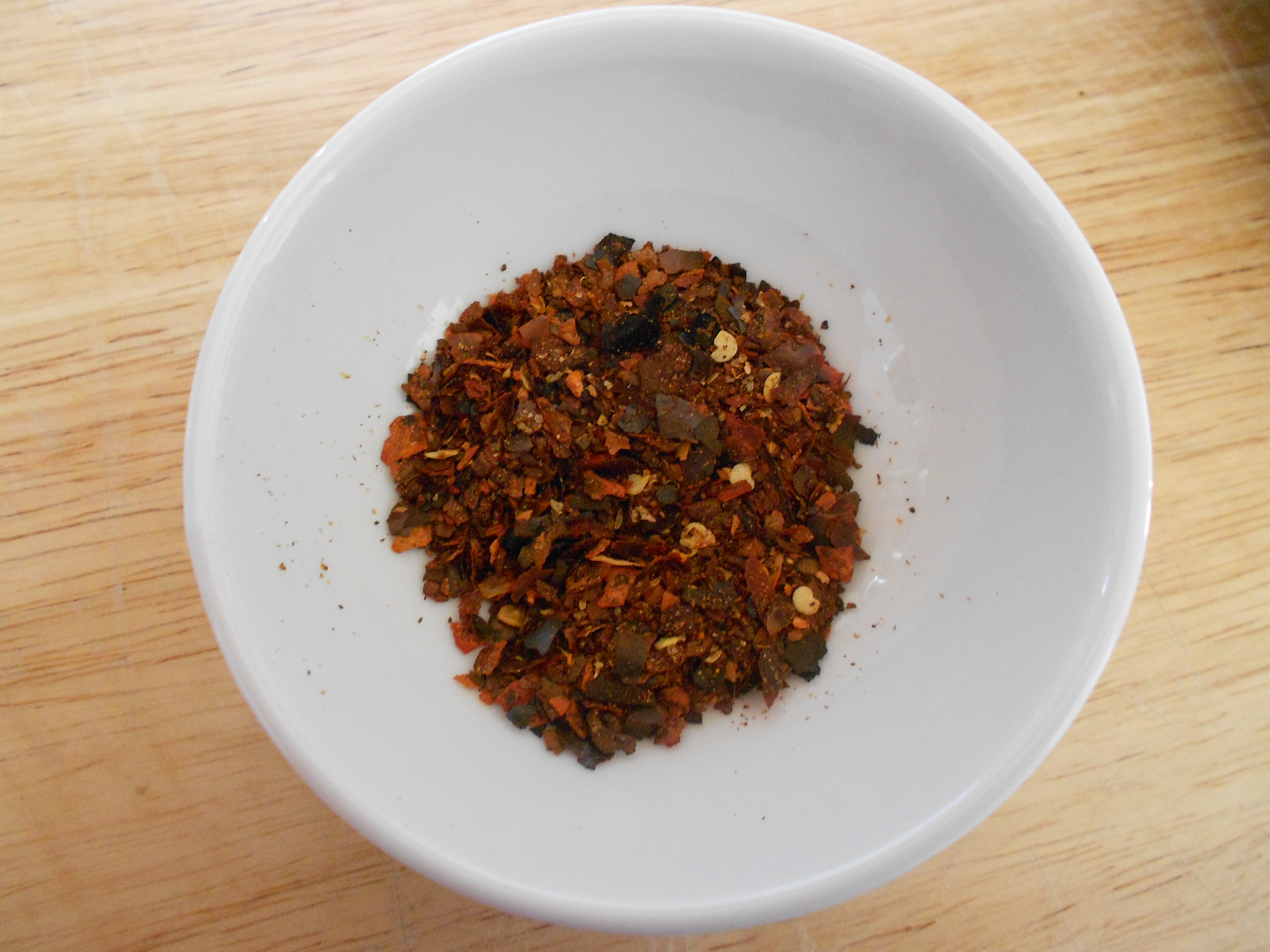
Merquén Flakes
A week ago, I met up with JAY and he gave me a bag full of spice blends and rubs to try out. The majority of the bag’s contents were from the Fancy Food Show. I began to smell everything once I got home, but the first item up for review was the merquén, which was obtained by JAY at a Fancy Food Shoe-related Chilean event . Since I had no idea what it was, other than dried and smoked chiles, I did my research. The chile from which the spice is derived is called the cacho de cabro, or goat’s horn. An indigenous tribe, the Mapuche, traditionally use merquén in many dishes. The chiles are smoked, dried, crushed, and mixed with coriander, cumin and salt. It sounded delicious.
I have to be honest. When I made the recipe for dip (included in the spice bag), I was underwhelmed at first. Essentially, the dip is merquén, cream cheese, garlic purée, and cream. I was expecting something unique and exciting, especially after what I had heard and read about the spice blend. As it turns out, the packets of merquén only contained the chile flakes. A few years ago, chipotle seasonings made a splash in the world of foodies; my dip tasted as though I had mixed chipotle flakes into cream cheese. The smoky, hot flavor was present without the accompanying coriander and cumin. Once I added them, the dip was magnificent. I began with a ¼ teaspoon of each, and increased the amount in increments until I had a satisfactory amount. For each teaspoon of merquén flakes, I added ½ teaspoon of kosher salt, ½ teaspoon of ground cumin, and 1 teaspoon of ground coriander. I have no idea whether the proportions I used are congruent with the actual spice blend, but I thought it tasted incredible.
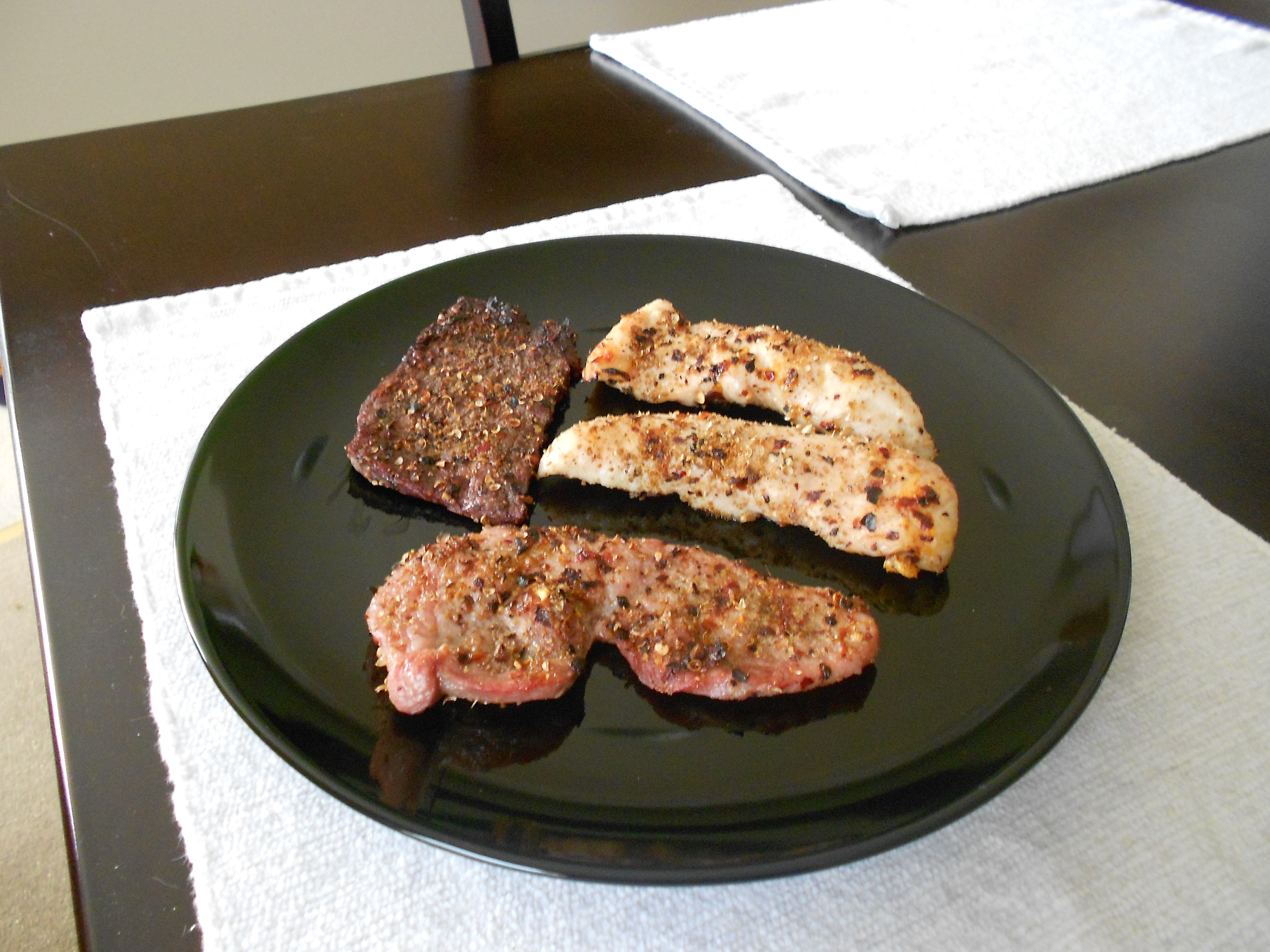
Merquén-Rubbed Grilled Meat Selection
After whipping up another batch of merquén, I fired up my grill. While the charcoal was doing its thing, I rubbed the blend onto a couple chicken tenders, a tiny piece of steak and a thin pork cutlet. The seasoning’s fragrance made me wish I had some of the dip left. I restrained myself from making a second bowl of dip by watching the charcoal turn gray. After retrieving my meat selections from the grill, I admired them briefly and then tucked in. Personally, I loved the pork cutlet best, but honestly each piece was very good. I saved a chicken tender for the next day, and it was equally amazing. For the record, I enjoyed my merquén-rubbed meats with cheesy mashed potatoes. I thought about adding the seasoning to them as well, but decided I should restrict it to one part of the meal at a time.
I encourage everyone to find the spice blend in a store or buy it online and try it soon. Whether you use it as a rub, an oil infusion for slices of baguette, or making it your secret ingredient, merquén is worth the effort to find it.
-TKW
Disclaimer: I know something to this effect is stated in our “About” section, but (as sometimes happens), we received freebies. That said, our words are our own.
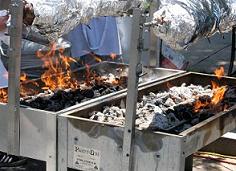
 They warmed the buns before serving, an example of the fine attention to detail that every vendor exercised. When the buns ran out, they started piling meat onto plates and serving with grilled zucchini, pickled onions, and a homemade sauce.
 The sides and desserts at Farm-to-Street were light and refreshing, like the gazpacho from